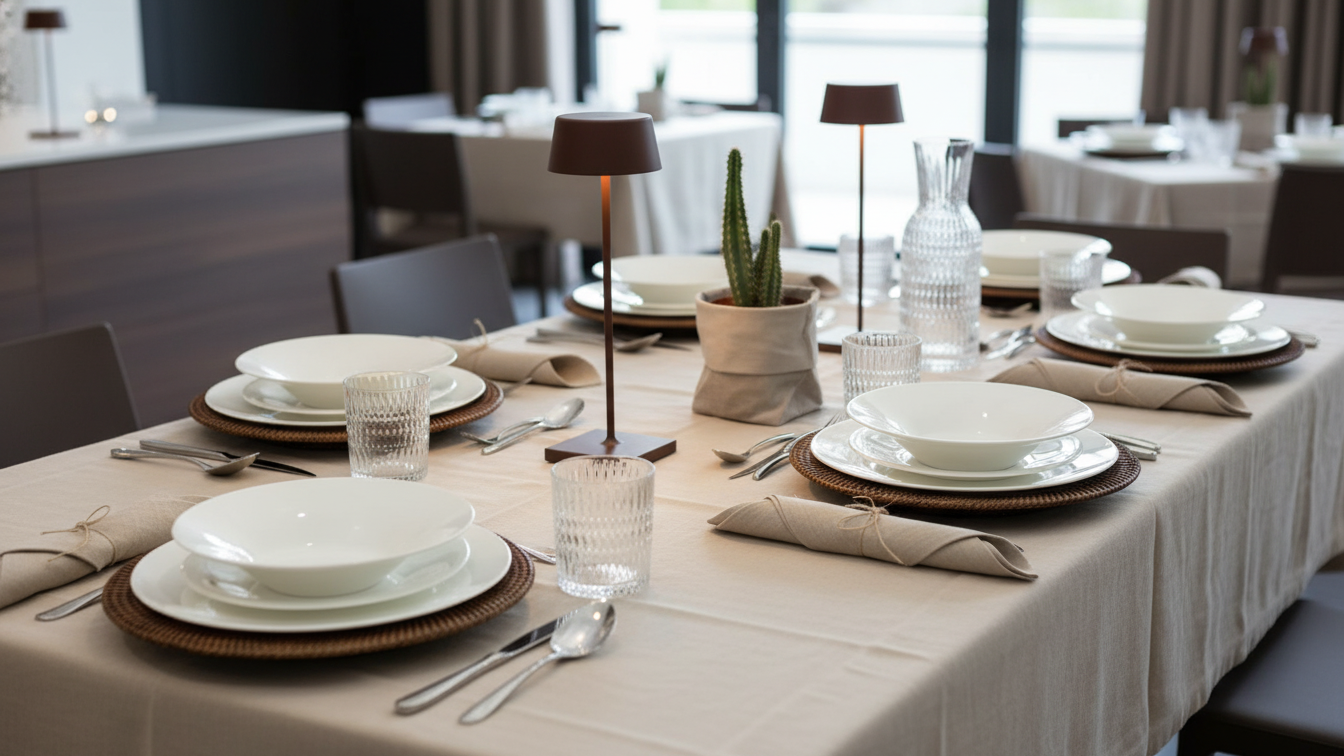
Before a single dish arrives, the table has already spoken. The drape of the cloth, the weight of the napkin in hand, the way light catches the weave — these are the opening notes of every dining experience a hotel delivers.
Restaurant and dining-room textiles are the most visible hospitality linen a property uses, yet they are often the least considered. Bedding decisions happen behind closed doors. Towelling choices stay in private bathrooms. Table linen, by contrast, is on permanent display — photographed by guests, scrutinised by critics, and noticed by every person who sits down to eat.
It is also the category where poor choices are most immediately felt. A napkin that scratches the lips. A tablecloth that catches the light in a way that reads as plasticky. A runner that pills after two services. Each of these signals, however small, accumulates into a dining experience that feels less than it should.
The Challenge: Performance Under Daily Pressure
Table linen in a working restaurant exists in conditions that are far more demanding than bedroom or bathroom textiles. It faces red wine, olive oil, candle wax, and the abrasion of cutlery — multiple times a day, every day. It must survive hot-wash cycles, commercial pressing, and the physical stress of being folded, unfolded, and folded again hundreds of times before it shows wear.
The property that approached O Boutique operated a 60-cover restaurant serving breakfast and dinner daily, with a private dining room for events. Their existing table linen — a standard polyester-cotton jacquard — had become a source of quiet embarrassment. Guests assumed it was fine. The restaurant manager knew it wasn’t. She could see the pilling on the tablecloths, the graying of napkins that had been over-bleached to mask staining, and the way the fabric lay flat and lifeless under candlelight rather than holding shape.
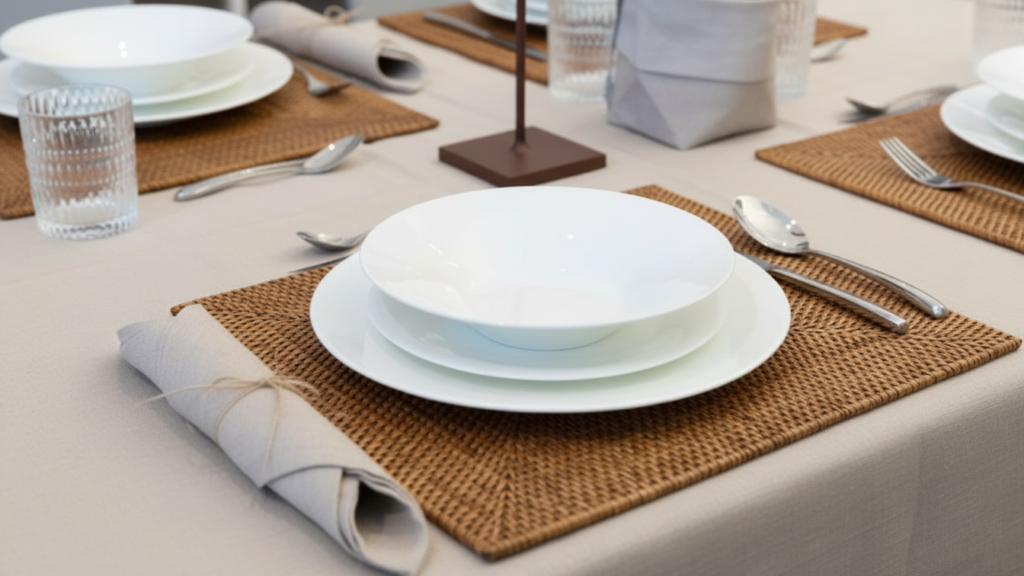
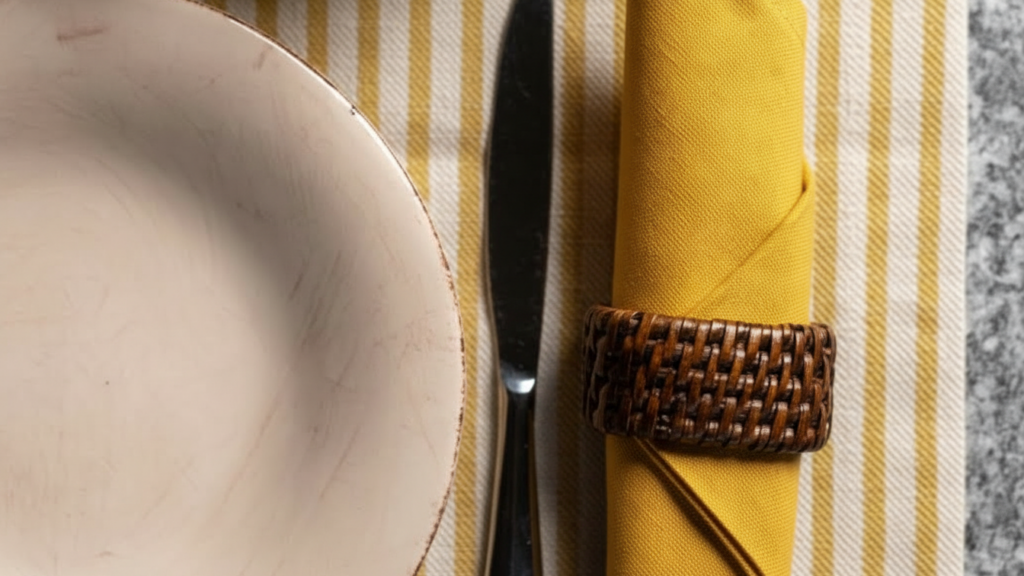
The brief was clear: replace the entire program with something that could perform at the same level for three years minimum, look beautiful on the table, and — crucially — survive the restaurant’s existing laundry setup without requiring specialist handling.
Material Direction: The Case for Linen-Cotton
Pure linen is the most beautiful table textile available. It drapes magnificently, improves with washing, and carries a visual character that no synthetic blend can replicate. It is also, at commercial scale, unforgiving. It wrinkles severely, requires careful pressing, and its natural colour variation — charming in small doses — can appear inconsistent across a full set of tablecloths.
O Boutique presented a linen-cotton blend at 55% linen, 45% long-staple cotton as the primary recommendation. The blend captures the drape and visual texture of pure linen while the cotton content softens the wrinkling tendency and gives the fabric a more predictable surface after pressing. For the napkins — where hand feel is paramount — a slightly higher cotton ratio of 40% linen, 60% cotton was selected, producing a softer touch without losing the linen character entirely.
Results: A Table That Earns Its Place
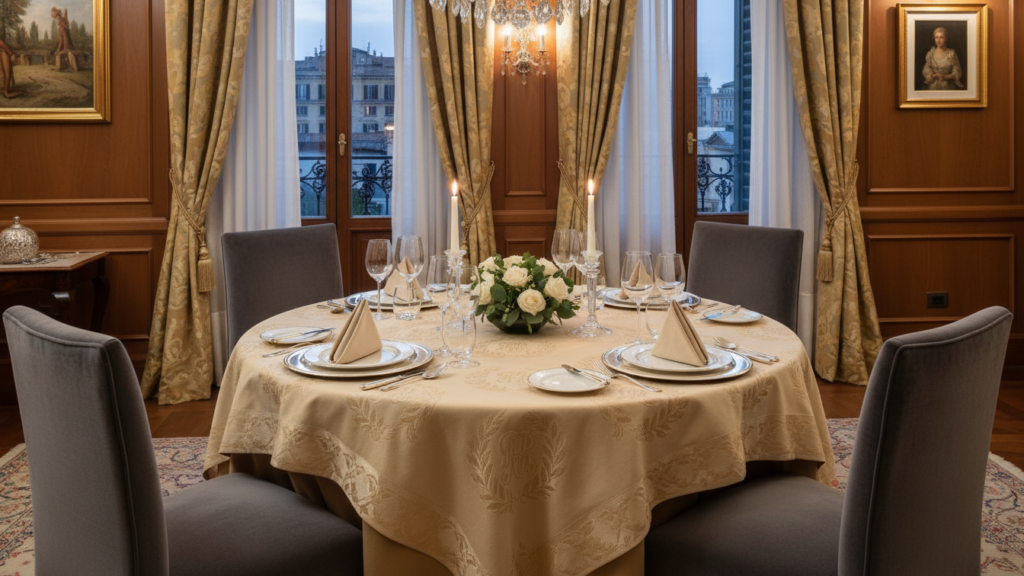
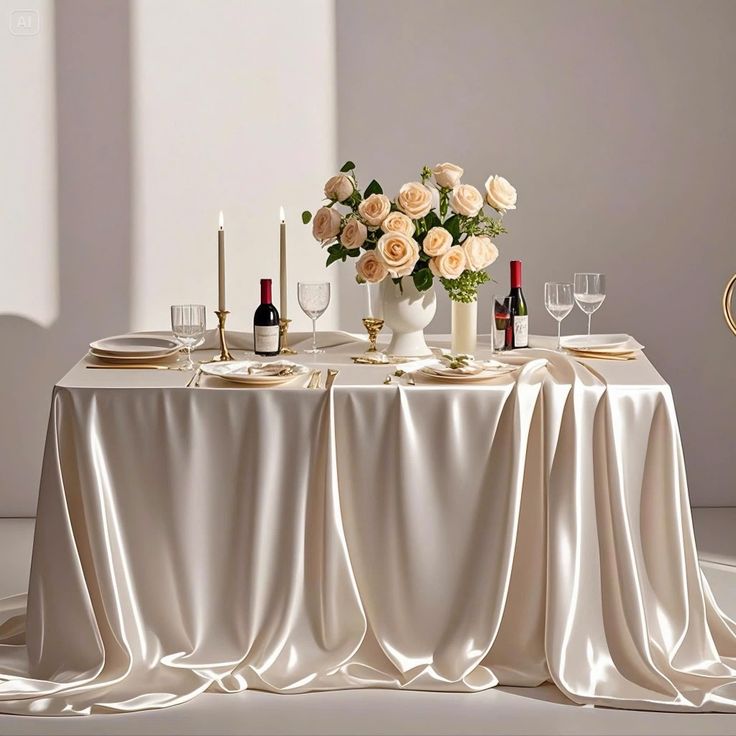
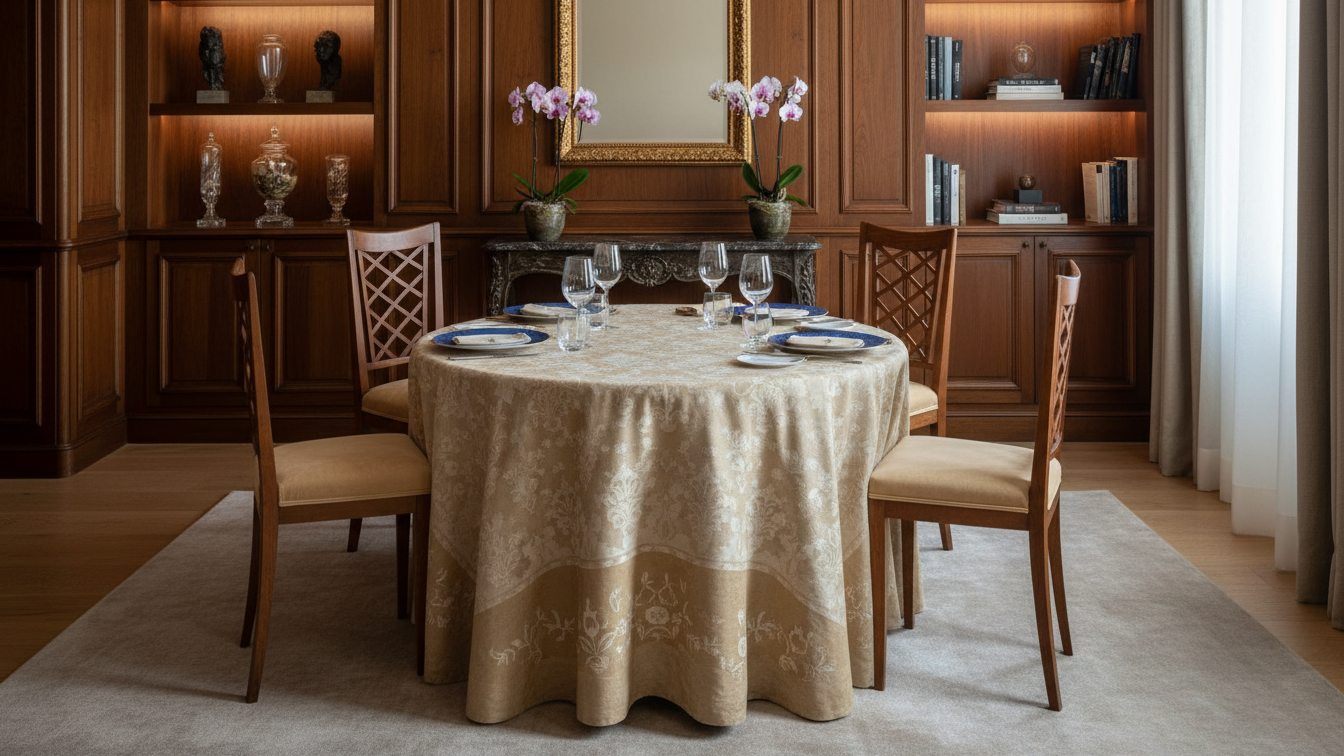
The full collection — tablecloths in three sizes, napkins, table runners, and cocktail napkins for the bar — was installed across the restaurant and private dining room in a single service week. The change was immediate and visible. Under the warm lighting of the dining room, the linen-cotton surface caught light differently: with depth and texture rather than the flat sheen of synthetic fabric.
Service staff noted the napkins held their folds through an entire service without resetting — a practical advantage that reduced prep time between covers. The tablecloths, pressed flat and laid in one motion, draped to the floor with the natural weight of the fabric rather than requiring adjustment at the corners.
Six months after installation, the restaurant manager reported that the tablecloths remained dimensionally stable and that no napkins had been retired from stock due to pilling or discolouration. The guest-facing result was more difficult to quantify but equally real: the dining room had begun appearing in guest photography in a way it hadn’t before. People were photographing the table before the food arrived.
"The tablecloth is the first thing guests touch when they sit down. We never thought about that until we changed it — and suddenly the whole room felt different."
Aguster Tweet
Blending Function with Craft
The hemstitch border — a drawn-thread technique that creates an open ladder pattern along the fabric edge — appears on both the tablecloth hem and the napkin fold line. It is a traditional finishing detail with a contemporary application: it signals handcraft without requiring it, adding visual interest at the moments guests look most closely, when they unfold a napkin or trace the edge of a cloth with their hand.
Kitchen linen — aprons, chef cloths, and service towels — completes the O Boutique table program. These pieces are designed not for the dining room but for the kitchen and floor staff who move between both. The service towel in a coarse herringbone linen, the sommelier apron in a mid-weight cotton twill: each piece extends the same design logic into the working parts of a restaurant, where textile quality affects performance as much as appearance.
A well-set table does not announce itself. It simply makes everything placed on it look better, feel more considered, and taste — somehow — more intentional. That is what O Boutique designs for: the textile that disappears into the experience while making the experience impossible to forget.