

Every hospitality brand today claims to care about sustainability. The word appears in welcome cards, on brand websites, in procurement briefs. But a claim is not a commitment — and guests, increasingly, know the difference.
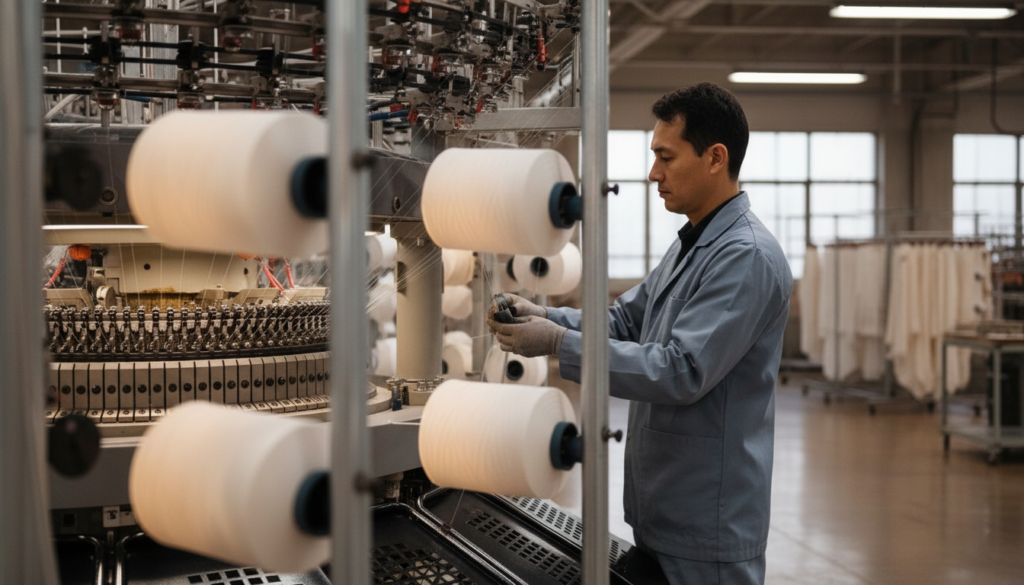
The textile industry is one of the world’s most polluting sectors. Conventional cotton production uses significant volumes of pesticides and water. Synthetic fibres shed microplastics with every wash cycle. Chemical finishing processes — used to create softness, wrinkle resistance, and whiteness — introduce compounds that linger in both fabric and waterways long after the product has left the factory.
For a hotel sourcing bedding, towels, or table linen, the question of sustainability is not simply ethical. It is increasingly commercial. A growing segment of guests — particularly in the luxury and conscious travel categories — actively seek out properties that can demonstrate responsible sourcing rather than simply describe it.
What OEKO-TEX® Actually Tests
OEKO-TEX® is an independent testing and certification system for textiles, operated by the OEKO-TEX® Association, a consortium of research and test institutes across Europe and Japan. It is not a marketing label that manufacturers apply for by completing a form. It is a laboratory test.
The Standard 100 certification — the most widely recognised in hospitality procurement — tests finished textile products for the presence of over 100 harmful substances, including pesticide residues, heavy metals, formaldehyde, pH levels outside the skin-safe range, and colorants that are allergenic or carcinogenic. Products pass only when every component — yarn, dye, finish, sewing thread, button — meets the threshold independently.
The certification is renewed annually, requiring re-testing of each product. A label issued two years ago does not guarantee that the current production run meets the same standard — which is why O Boutique maintains active certification documentation for every product in its hospitality range, available on request during procurement.
The Certifications That Matter for Hotel Procurement
OEKO-TEX® Standard 100 is the foundation, but it is not the only relevant certification for hospitality buyers. Three additional standards address different dimensions of responsible sourcing:
OEKO-TEX® Standard 100
Product safety
Tests finished products for harmful substances. Every O Boutique hospitality product carries this certification.
OEKO-TEX® STeP
Production facilities
Certifies manufacturing facilities for sustainable production processes, wastewater treatment, and working conditions.
GOTS
Organic fibre chain
Global Organic Textile Standard. Covers the entire supply chain from raw fibre to finished product for organic-certified cotton and linen.
EU Ecolabel
Environmental impact
European Commission certification covering energy, water, chemical use, and waste across the full lifecycle of textile production.
What This Means for Your Guests
A guest sleeping under an OEKO-TEX® certified duvet cover is sleeping against a fabric that has been tested to contain no residual pesticides, no formaldehyde used in crease-resistance finishing, no azo dyes that can release carcinogens on contact with skin. For a property hosting guests with sensitivities, allergies, or young children, this is a measurable assurance — not a marketing position.
It is also a communicable fact. Properties using certified textiles can reference the certification in their booking materials, in-room information, and sustainability reporting. Unlike vague claims about “eco-friendly” or “natural” materials — terms with no regulated definition in the textile industry — OEKO-TEX® certification is verifiable: every label carries a unique number that can be checked against the OEKO-TEX® database by any guest who wants to confirm it.
“Our guests don't ask about certifications. But they feel the difference — and when we tell them the bedding is OEKO-TEX® certified, the reaction is always the same: relief, not surprise."
Adrien Tweet

Beyond the Label: How O Boutique Sources
Certification is the floor, not the ceiling. O Boutique’s sourcing criteria extend beyond laboratory testing to the conditions under which the fibres are grown, the factories where fabrics are woven, and the distance materials travel before reaching a finished product.
The linen in O Boutique’s hospitality range is grown in Western Europe — primarily France and Belgium — where flax cultivation requires no irrigation and minimal pesticide application due to the natural resistance of the plant to the Atlantic climate. The cotton used in bathroom and table collections is sourced from GOTS-certified suppliers in Portugal and Turkey, where spinning and weaving facilities carry STeP certification for their wastewater management and worker welfare practices.
None of this is visible in the finished product. A hotel guest cannot see the supply chain in a folded towel or a pressed tablecloth. But the property manager can document it, the procurement team can verify it, and the brand can communicate it — accurately, specifically, and with the confidence that comes from holding paper rather than making promises.
Conscious luxury is not a texture or a price point. It is a decision about where things come from and what they leave behind. O Boutique builds its hospitality range on that decision — and certifies every step of it.



I look forward to seeing how these developments will improve service levels and customer satisfaction in the freight industry!